Where do boat tours leave from in Barcelona?
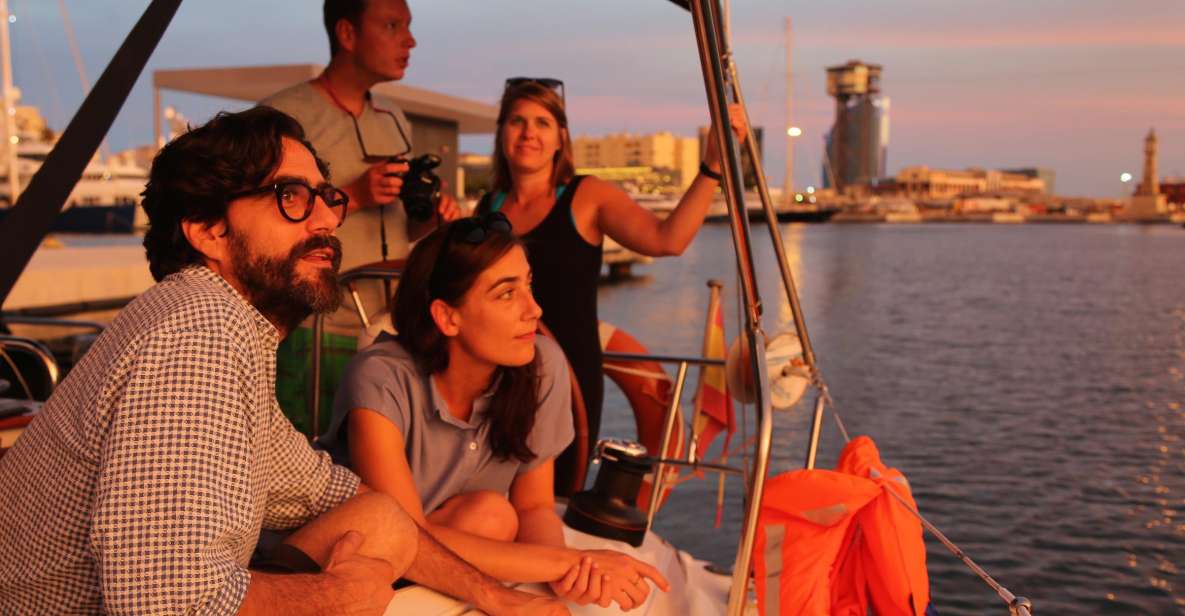
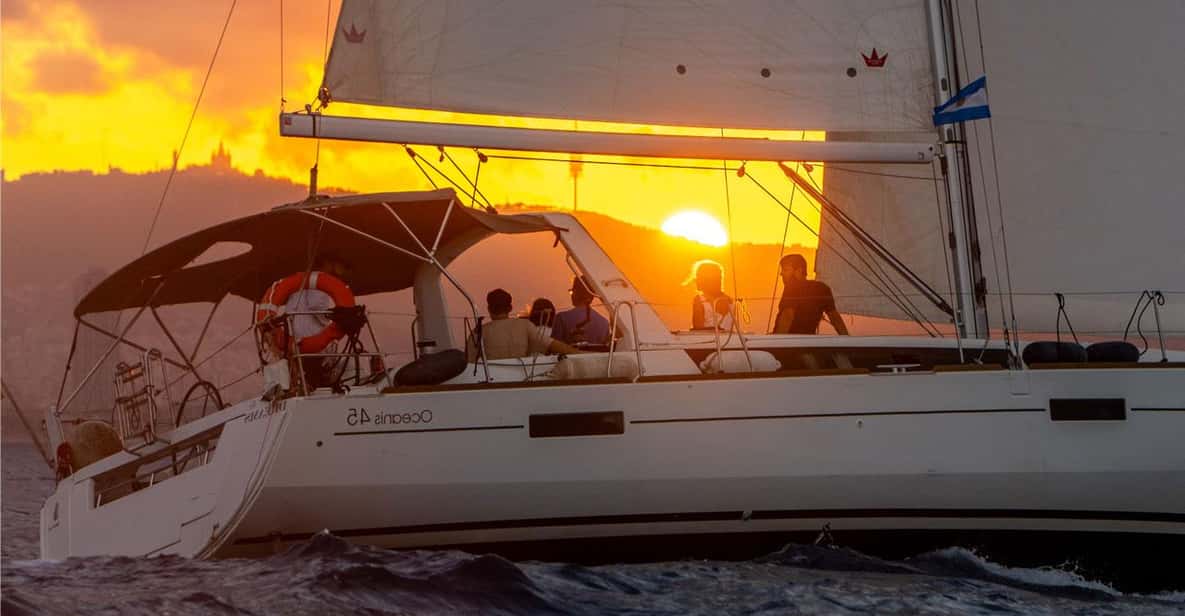
From three areas of the same waterfront and, in one case, another town. Las Golondrinas, the Bus Nàutic and the big catamarans use Moll de les Drassanes by the Columbus monument, metro Drassanes on L3. The sailing yachts board inside Marina Port Vell, meeting at the security checkpoint on Moll de la Barceloneta beside the Museu d'Història de Catalunya, metro Barceloneta on L4. Port Olímpic, ten minutes from Ciutadella–Vila Olímpica, handles charters. And one sail here leaves from Marina Badalona, metro Badalona Pompeu Fabra on L2.
How much does a boat tour in Barcelona cost?
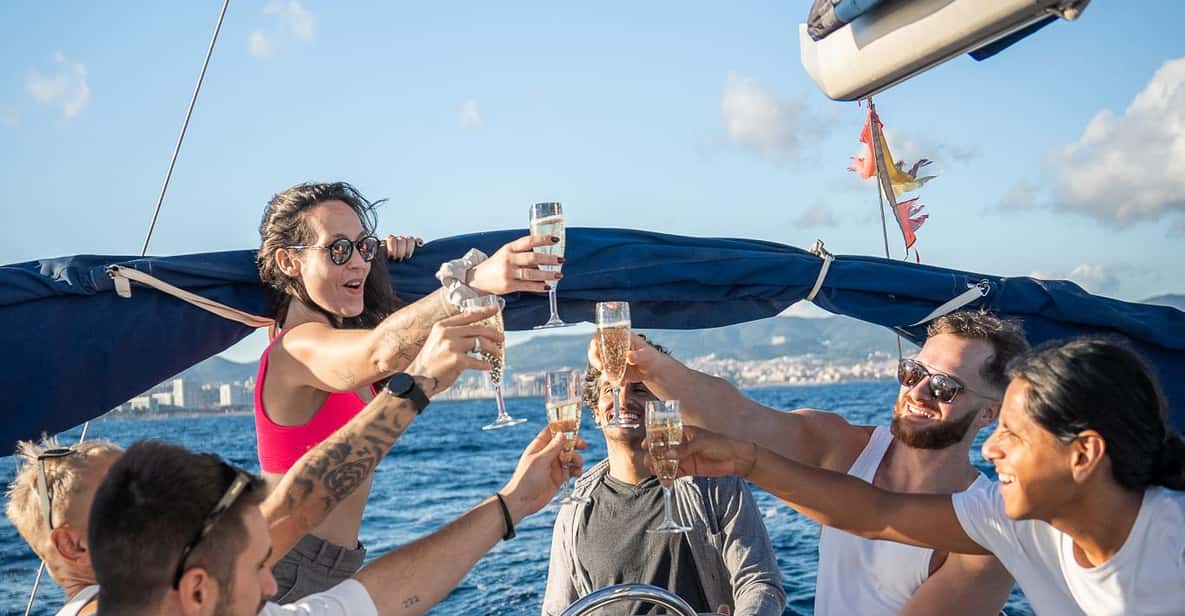
The floor is €7 for the forty-minute Las Golondrinas harbour boat, running from Drassanes since 1888. Among the sailing trips, $17 buys an hour at sunset, $29 a small-group sailboat, $31 two hours on a catamaran with tapas, $45 the top-rated cava sail and $75 four hours with a swim stop. Charters are priced per hull, from about €340 for a half day.
Can you swim on a Barcelona boat trip?
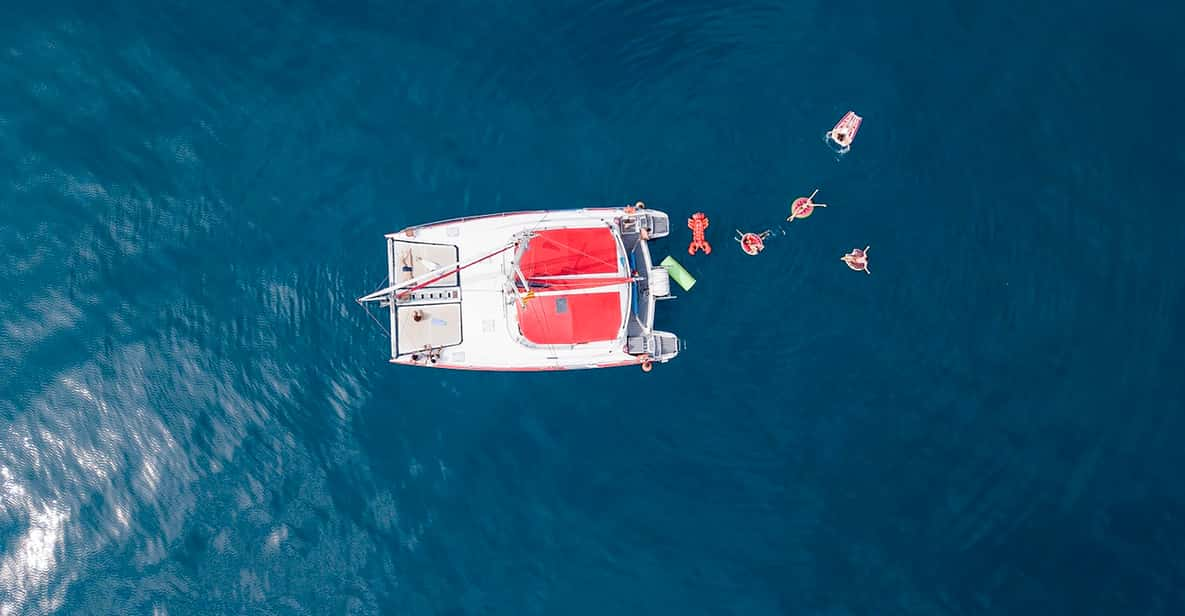
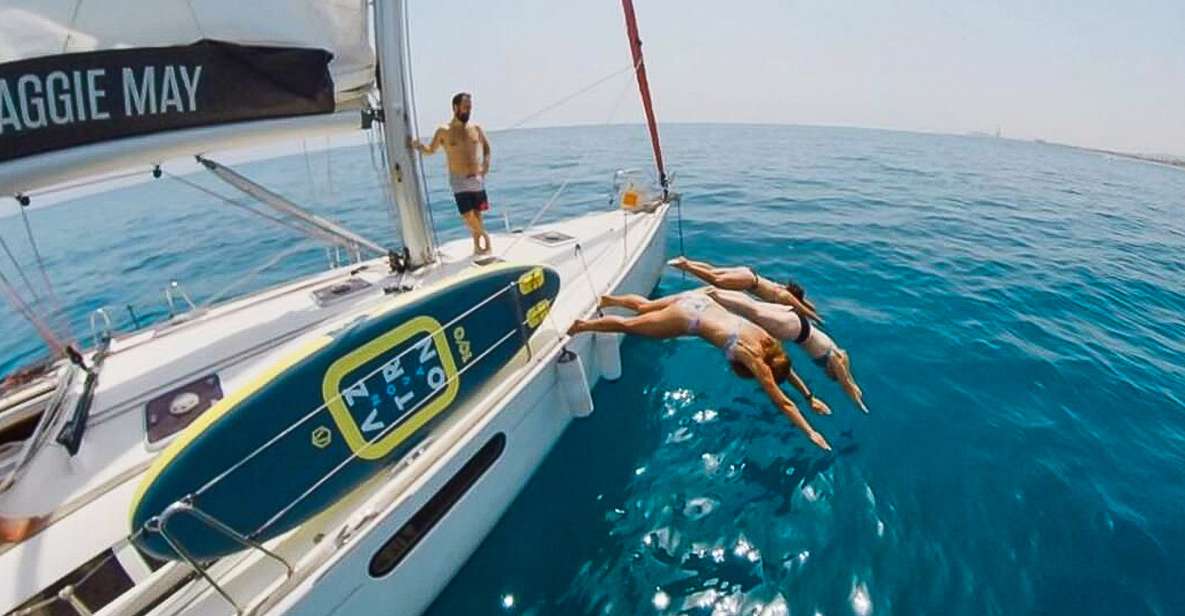
Only on the boats that leave the harbour to do it — $42 for two hours, the Badalona sail, or $75 for four hours. Barcelona City Council's bathing guidance tells swimmers to stay inside the yellow buoys and away from breakwaters and harbour waters, and the sunset fleet does not anchor anyway. If a listing says nothing about a swim stop, assume there is not one.
Is Las Golondrinas worth it compared with a sailing tour?
For €7 an adult and €2.75 a child aged four to ten, the forty-minute boat gives you the working port, the superyachts and Montjuïc from the water, on departures up to 18:15. The hour-long Port and Coast version at €14.80 adds the Barceloneta front and the Olympic Port. Neither sails, neither serves you anything, and neither is timed to sunset — which is the whole product on the yacht sails.
What time is the best departure for a sunset sail?
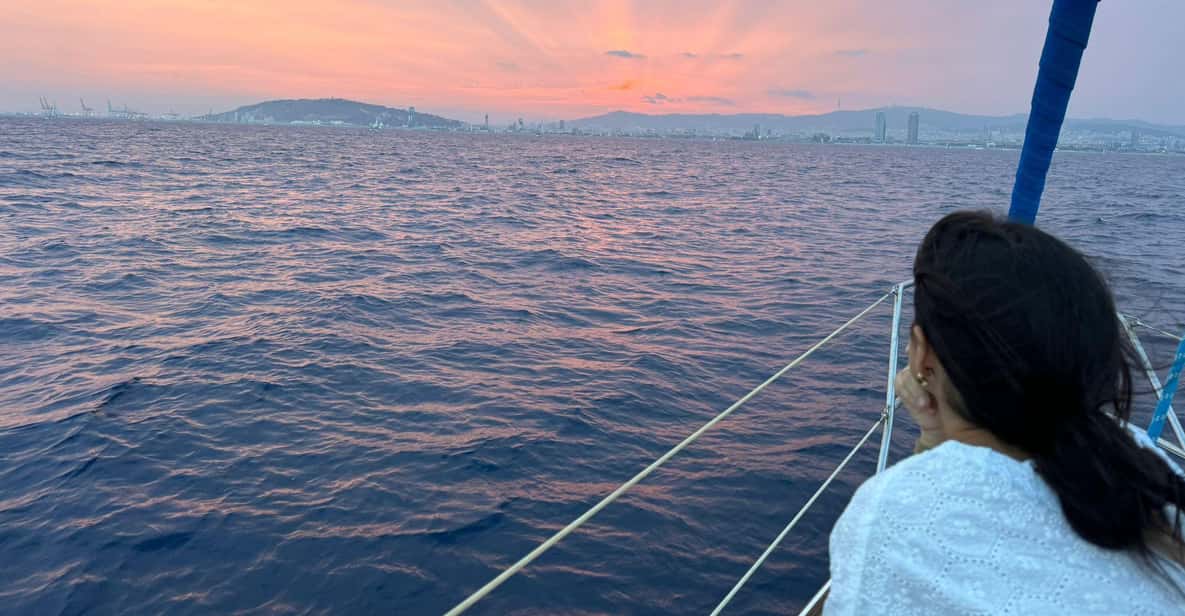
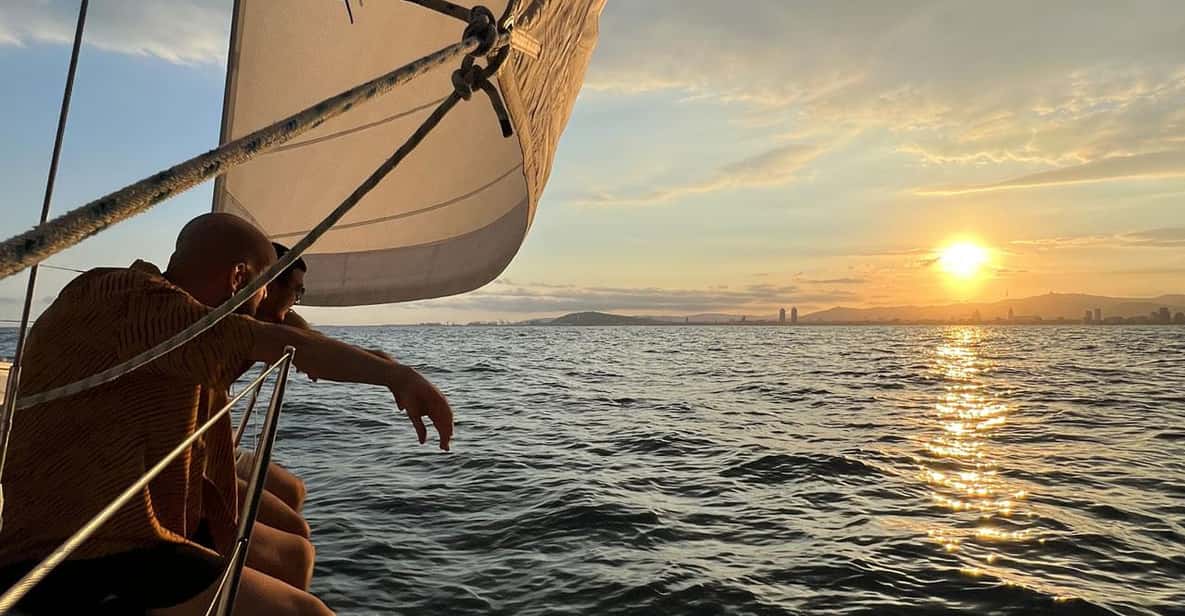
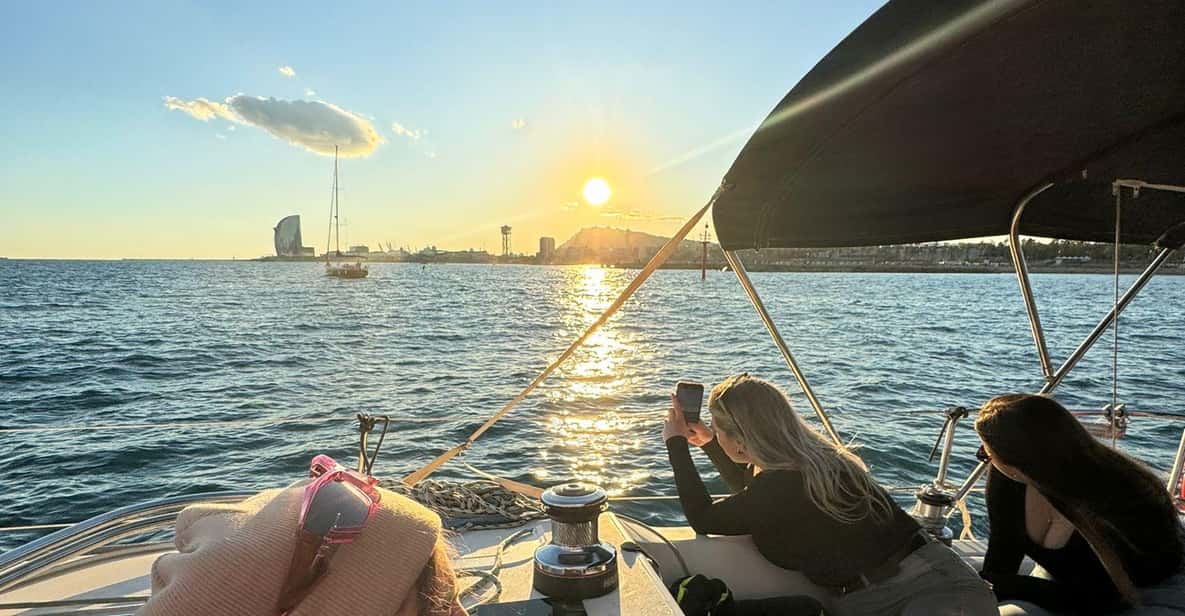
The last one of the day, and not only for the light. The garbí sea breeze builds through the afternoon — the standard study of Barcelona's sea breeze records its maximum speeds between about midday and four — then eases as the sun drops. A late departure gets the strongest reliable wind and the sails actually up. Mornings here are the calm slot, the reverse of most Mediterranean ports.
What happens if the wind cancels the boat?
The operator moves you or refunds you, and most listings here also cancel free up to 24 hours ahead. The two winds that do it are the tramuntana, the cold northerly that can sit over a cloudless day, and the llevant, the easterly that pushes a long swell onto an unsheltered coast. Monohulls stand down first, catamarans last longer, and the harbour boats run in almost anything.
Which month is best for a boat trip from Barcelona?
September, then May. September still holds a 23 °C sea with the longest run of settled evenings and noticeably thinner decks than August. May has a 17 °C sea — cold for swimming, fine for sailing — the most reliable breeze of the year and the lowest prices of the running season. July and August have the warmest water, 23 °C and 25 °C, and boats that sell out days ahead.
Can you take a boat from Barcelona to the Costa Brava or Sitges for the day?
Not as a scheduled public boat. The Costa Brava and Garraf day sails are private charters, mostly leaving from Port Ginesta or Sitges rather than the city, priced by the hull from about €340 for four hours. From Barcelona itself the longest listing is the four-hour sail. Renfe's R2 Sud reaches Garraf and Sitges from Barcelona-Sants for a few euro — the cheap version of the same coastline.
I am here on a cruise ship — can I fit a boat tour in?
Yes, if you are docked at Moll Adossat and the sail is an early evening one. The PortBus shuttle runs from the Adossat terminals to Portal de la Pau by the Columbus monument for about €3 one way, cash only, in ten to fifteen minutes — and that stop is the Moll de les Drassanes quay. Allow for the return shuttle queue and skip the last departure of the evening.