Cruises From PortAn Independent Guide

Curaçao · Florida & the Caribbean · Willemstad & Jan Thiel

Boat Tours & Day Cruises from Curaçao

Seven boats, three harbours and one crossing that decides everything — the two hours of open water between Spanish Water and Klein Curaçao, which is either the best day of your trip or the one you spend at the rail.

Day-cruise boats at Willemstad & Jan Thiel on a boat tour from Curacao, Curaçao
Willemstad & Jan Thiel · 12.1084, -68.9335
Boats compared
7
From
$75 per person
Average rating
4.4/5
Season
Year-round

Quick answer

Seven well-reviewed boats work out of Curaçao, and four of them are doing the same thing: crossing to Klein Curaçao, the uninhabited sandbank about 24 kilometres off the southeast tip, from $140 to $160 for a day that runs eight or nine hours. The rest sail the sheltered leeward coast — the west-end run to the Blue Room at $150, turtles and Kenepa Grandi at $75, and a three-hour catamaran sunset out of Caracas Bay at $130.

Almost none of this leaves from Willemstad. The cruise ships tie up at the Mega Pier in Otrobanda, ten minutes on foot from the Queen Emma Bridge, but the day boats load at Fisherman's Pier in Caracasbaai, at Jan Thiel beach, or from the marinas inside Spanish Water — a quarter of an hour east by taxi, and boarding at 06:30 for the Klein Curaçao boats. The west-coast trips start further out again, near Playa Santa Cruz, forty minutes up the leeward shore.

Curaçao is also one of the few Caribbean islands where the water itself is free: unlike Bonaire, the Curaçao Marine Park charges no nature fee, so nothing is collected at the pier beyond what the operator already sold you. The short list of things that are extra is below, along with the months the crossing turns rough.

Compare

Which boat from Curaçao is right for you?

The four kinds of day out that leave this island, each shown with the cheapest well-reviewed example on this page. Prices, ratings and durations are the operators' own figures from the listings below, re-checked in September 2026; the last column is the thing that actually decides it.

Type of dayTime outFromWhat decides itBook
Klein Curaçao, full day9 hours$140Two hours of open water each way, then an empty beach Details
West coast, beaches and caves1 day$150Blue Room and a BBQ, all of it in flat lee water Details
Turtles and a west-end beach4 hours$75Half a day, the cheapest snorkelling on the island Details
Sunset catamaran3 hours$130Drinks and Caracas Bay, back in time for dinner Details

The boats

Day cruises and boat tours from Curaçao

Seven boats, each carrying its operator's own rating and review count. Prices are per person. Read the ratings closely on this island — the spread here is wider than on most Caribbean coasts, and one popular listing sits well below the rest. Re-checked in September 2026.

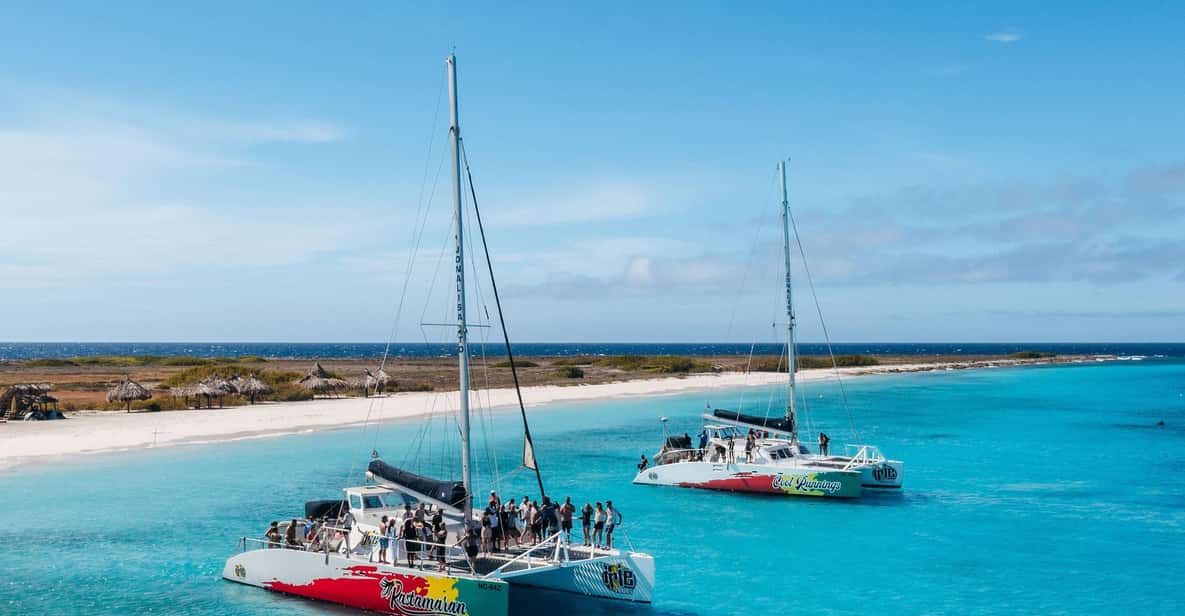
Klein Curaçao: Full Day Boat Trip — a boat tour from Curacao, Curaçao

Klein Curaçao: Full Day Boat Trip

4.8★ (322 reviews) · 9 hours · from $155

Route
Willemstad side to Klein Curaçao and back, with the lighthouse, the wreck and the west beach
Boat
Motor vessel, covered deck, onboard toilets
Departs
Fisherman's Pier, Caracasbaai — boarding from 06:30
Swim stops
Snorkelling off the lee shore plus all day on the beach
Group
Large group
Best for
The full Klein Curaçao day with the strongest rating on the page
Check Availability
Willemstad: Klein Curaçao Catamaran Yacht Tour — a boat tour from Curacao, Curaçao

Willemstad: Klein Curaçao Catamaran Yacht Tour

4.5★ (291 reviews) · 8 hours · from $160

Route
Klein Curaçao under sail, with the crossing made on a catamaran hull
Boat
Sailing catamaran
Departs
Spanish Water / Jan Thiel side, stated on the voucher
Swim stops
One long snorkel stop, then beach time
Group
Large group
Best for
People who want the sail itself to be part of the day
Check Availability
Curaçao: Turtle Bay & Blue Room Boat Tour with Snorkeling — a boat tour from Curacao, Curaçao

Curaçao: Turtle Bay & Blue Room Boat Tour with Snorkeling

2.9★ (185 reviews) · 4.5 hours · from $99

Route
Turtle Bay and the Blue Room sea cave with snorkelling
Boat
Motor boat
Departs
Meeting point given on the voucher — check it before you book
Swim stops
Two, including inside the cave
Group
Group
Best for
The cave in half a day — but see the rating note below
Check Availability
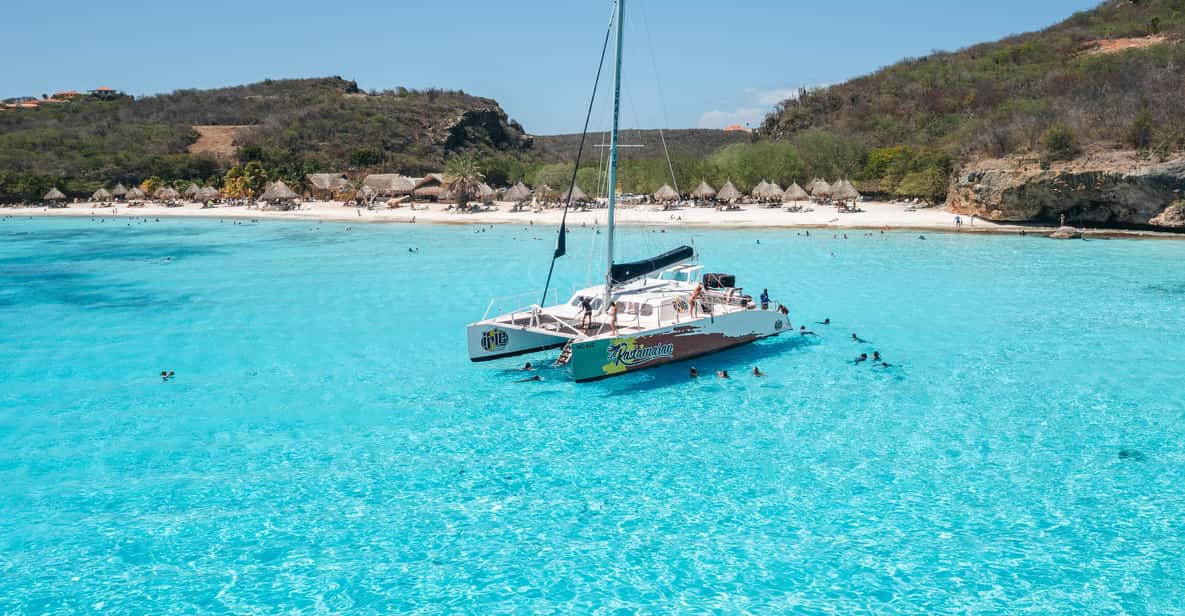
Klein Curacao Catamaran Day Trip with Snorkeling — a boat tour from Curacao, Curaçao

Klein Curacao Catamaran Day Trip with Snorkeling

4.6★ (78 reviews) · 9 hours · from $140

Route
Klein Curaçao with a snorkel stop, catamaran crossing both ways
Boat
Catamaran
Departs
Caracasbaai / Jan Thiel
Swim stops
One or two, plus the beach
Group
Group
Best for
The cheapest crossing that still holds a rating above 4.5
Check Availability
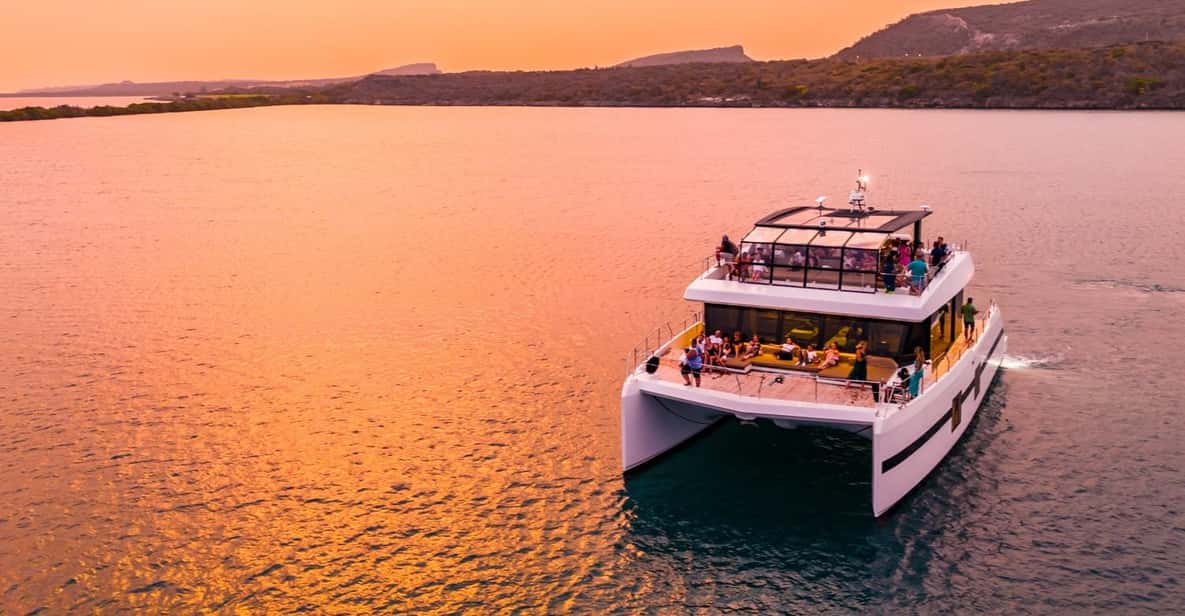
Caracas Bay: Sunset All-Inclusive Party on a Catamaran — a boat tour from Curacao, Curaçao

Caracas Bay: Sunset All-Inclusive Party on a Catamaran

4.5★ (73 reviews) · 3 hours · from $130

Route
Caracas Bay and the sheltered water off Spanish Water at dusk
Boat
Catamaran, open deck
Departs
Caracas Bay
Swim stops
None advertised
Group
Large group, all-inclusive drinks
Best for
An evening on the water with no crossing involved
Check Availability
West Coast Boat Trip with Beaches, BBQ and Blue Cave — a boat tour from Curacao, Curaçao

West Coast Boat Trip with Beaches, BBQ and Blue Cave

4.7★ (52 reviews) · 1 day · from $150

Route
The leeward west coast — beaches, the Blue Room cave and a barbecue ashore
Boat
Motor boat with a BBQ setup
Departs
West coast, near Santa Cruz / San Juan
Swim stops
Several along the lee shore
Group
Small group
Best for
Calm water all day and the cave without the Klein Curaçao swell
Check Availability
Curaçao: Snorkel with Turtles & Kenepa Grandi Beach — a boat tour from Curacao, Curaçao

Curaçao: Snorkel with Turtles & Kenepa Grandi Beach

4.7★ (30 reviews) · 4 hours · from $75

Route
Turtle snorkelling and Playa Kenepa Grandi at the west end
Boat
Small motor boat
Departs
West end, near Sint Willibrordus / Westpunt
Swim stops
Two
Group
Small group
Best for
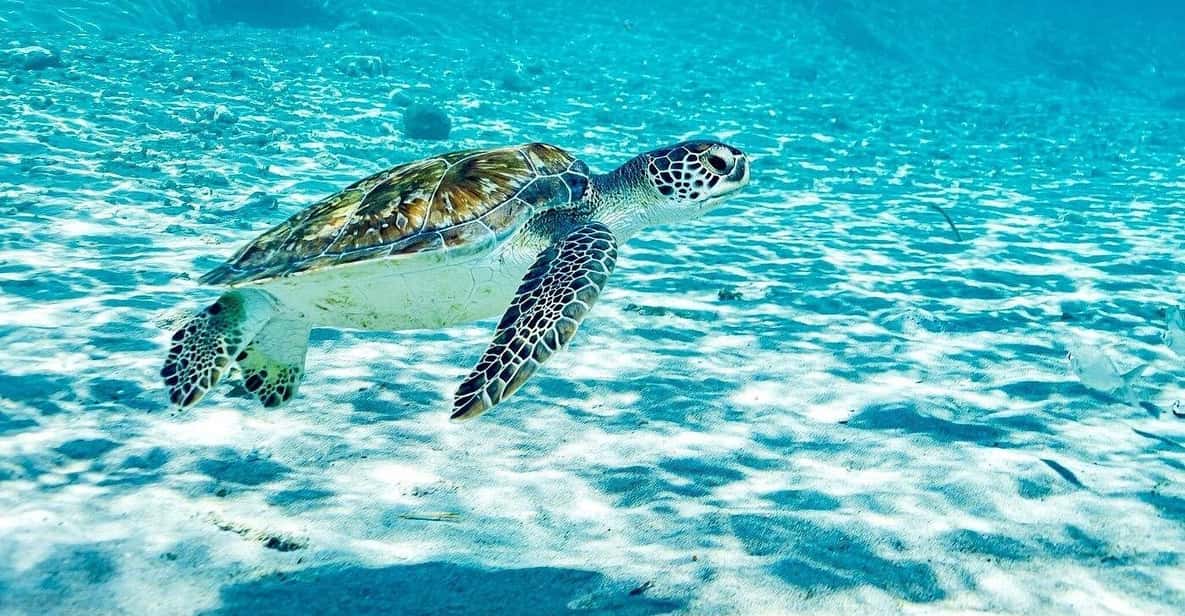
Half a day, the lowest price here, and the turtles
Check Availability

The piers

Willemstad is where you land, not where you sail from

Curaçao's cruise berths and its day-boat harbours are two different places, twelve to forty kilometres apart. This is the single most expensive mistake available on this island, because the Klein Curaçao boats leave once, early, and do not wait.

Mega Pier 1 and 2, on the Otrobanda side of Sint Anna Bay, take the big ships — the second berth handles Oasis-class hulls. From the drop-off it is roughly ten minutes on foot through the Rif Fort complex to Brion Square, and from there the Queen Emma Bridge swings you across to Punda. The bridge is a wooden pontoon from 1888 and it opens whenever a ship needs the channel; when it does, a free ferry runs the same crossing, so being on the wrong side is a delay, never a problem. Mathey Wharf, used by smaller ships that fit under the Queen Juliana Bridge, puts you closer to Brion Square still. Neither berth sends out a single day boat.

Fisherman's Pier at Caracasbaai — Vissershaven Spaansewater, at the far end of Caracasbaaiweg — is the busiest departure on the island and the one most Klein Curaçao listings use. It is about fifteen minutes by taxi from central Willemstad, and the Klein Curaçao operators board from 06:30 to 06:45 for a seven o'clock departure. Some catamarans instead pick up at Jan Thiel beach, a few minutes further round, and others load inside Spanish Water itself, at the Santa Barbara / Seru Boca and Kima Kalki marinas. Spanish Water is a large landlocked bay about ten kilometres east of Willemstad with one narrow entrance at Caracas Bay, which every hull has to thread — a boat leaving a marina berth is on the open sea within minutes of passing that gap.

The west-coast trips start somewhere else entirely. The Blue Room and Mushroom Forest boats work out of Playa Santa Cruz and San Juan, around forty minutes up the leeward road from Willemstad; the cave itself, Boka Santa Cruz, has no road access at all and can only be reached by boat or by paddling roughly twenty minutes from the beach. The turtle-and-Kenepa boat starts further west again, near Playa Kenepa Grandi in the Westpunt district, about forty kilometres and forty to forty-five minutes from town. Autobusbedrijf Curaçao's western routes run to Westpunt for the higher of its two flat fares — a little over two US dollars at the guilder's fixed 1.79 peg — but the timetable is built for residents, not for a boat that leaves at eight.

Pier or beachWhat leaves from itFrom central WillemstadWorth knowing
Mega Pier 1 & 2, OtrobandaCruise ships only — no day boatsIn town; 10 min walk to the Queen Emma BridgeTwo berths, the larger taking Oasis-class ships
Mathey WharfSmaller cruise ships that clear the Juliana BridgeSteps from Brion SquareClosest berth to Punda and the pontoon bridge
Fisherman's Pier, CaracasbaaiMost Klein Curaçao boats~15 min by taxi eastBoarding from 06:30 for a 07:00 sailing; end of Caracasbaaiweg
Jan Thiel beachCatamaran pickups for Klein Curaçao~20 min by taxiBeach access charges a small entrance fee by day
Spanish Water marinasCatamarans and private charters~20 min by taxiOne narrow entrance at Caracas Bay; all traffic funnels through it
Playa Santa Cruz / San JuanBlue Room and Mushroom Forest boats~40 min drive northwestThe cave has no road access — boat or kayak only
Westpunt / Kenepa GrandiTurtle and west-end snorkel boats~40 km, 40–45 min driveABC bus runs the western route on a resident timetable

The arithmetic

What you can do without a boat, and what you cannot

Curaçao is a rental-car island with public beaches and no marine park fee, so the do-it-yourself comparison is unusually strong here — right up to the point where the water gets deep.

Start with the honest part. The Curaçao Marine Park, managed by the Carmabi foundation along the southern coast, charges nothing to enter the water. That is not the Caribbean norm: neighbouring Bonaire's Stinapa nature fee runs to forty US dollars per person per calendar year and is mandatory for anyone who so much as snorkels inside its marine park. In Curaçao you walk in from the sand. The island's reef is a fringing one, close enough to shore that most of its seventy-odd sites are reachable without a hull under you, and the beaches on the leeward coast are either free or charge a few guilders — Jan Thiel asks NAf 6 a head, roughly three dollars, with entry free after half past four in the afternoon.

So a rental car, a mask and a tank of fuel will get you to Playa Kenepa Grandi, to Playa Piskadó where the turtles come in behind the fishing boats, and to Playa Santa Cruz. Two people can do that for a fraction of $75 each. What the car does not buy is the Blue Room: Boka Santa Cruz has no road, and the only two ways in are a boat or a twenty-minute paddle across an open bay in whatever the wind is doing that morning. It also does not buy Mushroom Forest, which is a dive and snorkel site off the northwest coast rather than a place with a car park.

And it certainly does not buy Klein Curaçao. There is no ferry, no scheduled service, no way to charter a lift with the fishermen: the island sits roughly 24 kilometres southeast of the main island's tip, and the only access is one of the day boats on this page. That is why the four crossings here cluster between $140 and $160 rather than competing each other down — the price is not for a beach, it is for the only hull going there. What varies between them is the vessel, the crossing time and the food, not the destination.

One more sum worth doing before you book. Klein Curaçao has no shop, no tap, no toilet and no shade of any kind except the lighthouse — the beach palapas that look public in the photographs belong to individual catamaran operators and are set out for their own guests. A boat with onboard toilets and its own palapa row is buying you the whole day ashore; a cheaper hull that lands you on open sand at ten in the morning is buying you six hours in full Caribbean sun with whatever water you carried aboard.

The boats

Catamaran, motor vessel or small boat — what each does to the crossing

On the west coast the hull barely matters, because the island shelters the water. On the Klein Curaçao run it decides the whole day, so this table sets the four types against the crossing rather than against the price.

The rating spread on this page is worth reading before the price is. Six of the seven boats sit between 4.5 and 4.8 stars. The seventh, the Turtle Bay and Blue Room trip at $99, holds 2.9 stars across 185 reviews — not a thin sample and not an outlier month. It is the cheapest way to reach the cave on this page and it is the one listing here where the reviews say the day did not deliver. The west-coast day at $150 reaches the same cave at 4.7 stars over 52 reviews. That is the trade being offered, stated plainly.

HullOn this islandKlein Curaçao crossingOn this page
Motor vesselPurpose-built for the southeast run, covered deck, onboard toiletsAround 1h45 out, often quicker back with the wind behind$155 — the 4.8★ full-day trip
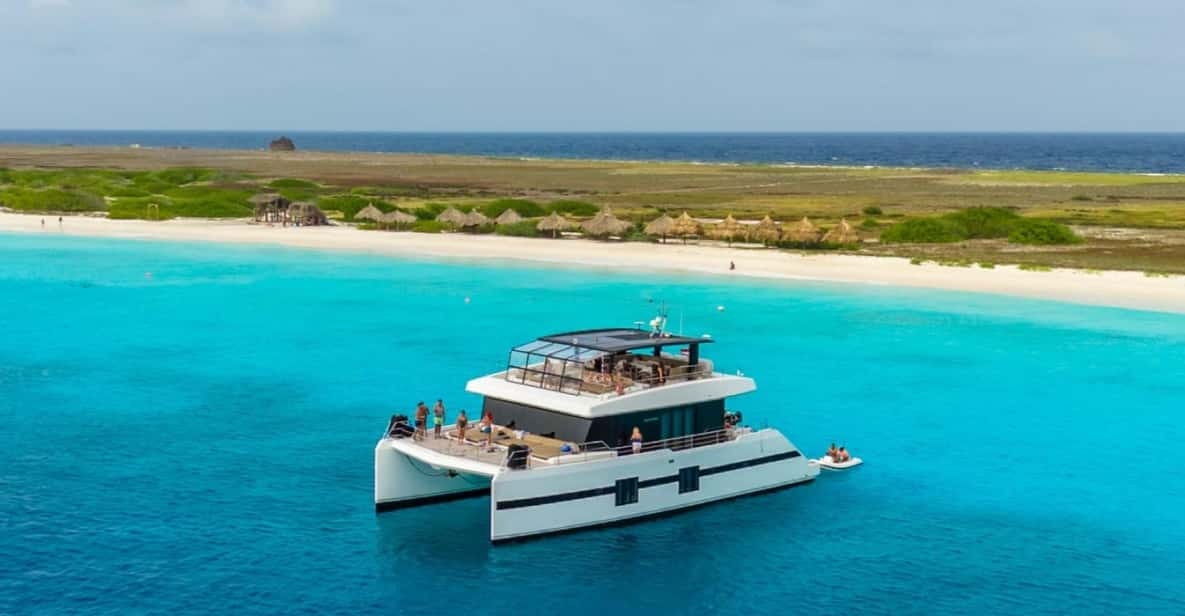
Sailing catamaranTwo hulls take the beam sea far better than oneSimilar time, noticeably less roll; the sail is the point$160 under sail, $140 with snorkelling
Small motor boatWest coast only — beaches, caves, turtle stopsNot used for the crossing at all$75 for four hours at the west end
Party catamaranSheltered water off Caracas Bay, drinks includedDoes not cross$130 for three hours at sunset
Powerboat charterPrivate hire out of Spanish Water and CaracasbaaiFastest crossing available, roughly 45 minutesCharter market, priced per hull rather than per seat

Prices

What a boat day from Curaçao costs

Three bands, drawn from the seven listings on this page rather than from a market average — and the bands here are narrower than almost anywhere else in the Caribbean, because one destination has no competition.

Under a hundred dollars — half a day on the lee shore

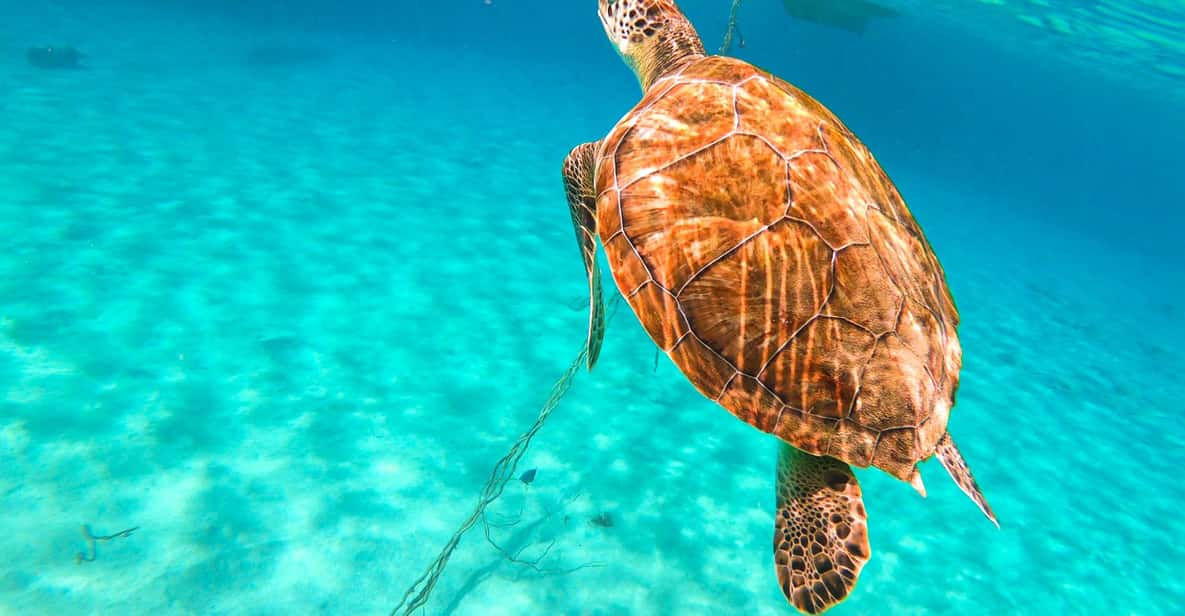
Only two boats live here. Turtles and Kenepa Grandi at $75 is four hours at the west end with a 4.7★ record over 30 reviews, and it is the cheapest thing on the island that puts you on a boat rather than a beach. Turtle Bay and the Blue Room at $99 is the other, and its 2.9★ rating is the reason it is cheap.

$130 – $150 — the sheltered day out

The Caracas Bay sunset catamaran at $130 buys three hours and an open bar in water the island protects; the west-coast day at $150 buys beaches, the Blue Room and a barbecue with no open-sea leg at all. Sitting in the same band, the $140 Klein Curaçao catamaran is the cheapest crossing there is.

$155 – $160 — the crossing, done properly

$155 for the highest-rated Klein Curaçao boat here, 4.8★ over 322 reviews across a nine-hour day; $160 for the catamaran yacht version at eight hours. The twenty-dollar spread between the cheapest and dearest crossing is smaller than the difference the hull, the shade and the onboard toilets make to the day.

Season

The boats run all year — the wind decides how the crossing feels

Sea temperatures below are the long-term monthly averages published by Climates to Travel, which puts the annual mean at 27.6 °C; the sailing notes describe what the trade winds do to the two-hour run southeast to Klein Curaçao.

There is no closed season here. Curaçao sits about twelve degrees north, well below the belt where Atlantic hurricanes normally track, and while the official danger period runs June to November — most intensely August to October — Climates to Travel lists only a handful of systems that have reached the island in living memory, among them Irene, Joan, tropical storm Bret, Ivan and Felix. In practice the thing that shapes a boat day here is not a storm, it is the trade wind, which blows more or less continuously from the east and is at its hardest from roughly January through April.

That wind is also why the west end is the calm end. Curaçao lies across the trades with its long axis running northwest to southeast, so the island itself acts as a breakwater: the north and east coasts take the swell straight off the ocean against limestone cliffs, while the leeward southwest shore — the whole strip from Willemstad up to Westpunt where the west-coast boats and the turtle trips work — stays flat and clear behind it. That is the same geography that made this island a shore-diving destination, and it is the reason a west-coast day and a Klein Curaçao day feel like different holidays.

Klein Curaçao gets none of that shelter. The boats run southeast into open water, taking the swell on the beam for most of the way out, which is why operators consistently describe the outbound leg as choppier and the return, running with the wind, as calmer and faster. Between January and April that difference is the whole conversation: a boat that takes an hour and forty-five minutes in June can take longer and feel considerably worse in March. If you are prone to seasickness, book a catamaran, take something an hour before boarding rather than on the quay, and stay on deck with the horizon in view.

Turtle season matters too. Klein Curaçao is one of the Caribbean's significant hawksbill nesting beaches, with green turtles breeding there as well; females come ashore after dark between roughly May and November, and Sea Turtle Conservation Curaçao monitors the beach. Day trips do not overlap with nesting, which happens at night, but it is worth knowing why crews ask people to stay off the marked dune line.

MonthSeaThe crossingWhat it means on the water
January26.5 °C (80 °F)WindyNortheast trades still running; dry, bright, and the swell builds through the month
February26.5 °C (80 °F)Windiest stretchSoutheast trades take over; the coolest sea of the year and the roughest beam sea
March26.5 °C (80 °F)WindyTrades at their strongest; take the catamaran, not the smallest hull available
April27 °C (81 °F)EasingStill breezy, still bone dry — the last of the high-wind season
May27 °C (81 °F)SettlingThe sea starts to flatten; turtle nesting begins on Klein Curaçao's beaches
June28 °C (82 °F)CalmThe comfortable window opens; warm water, light chop, full timetables
July28 °C (82 °F)CalmDriest months of the year; the crossing is at its easiest
August28.5 °C (83 °F)CalmPeak of the Atlantic storm season further north, but rarely felt here
September29 °C (84 °F)CalmWarmest sea of the year and the flattest water for the southeast run
October29 °C (84 °F)Calm, wetterRain arrives — around 100 mm — in short showers rather than lost days
November28 °C (82 °F)BuildingWettest month at roughly 120 mm; northeast trades return late in the month
December27 °C (81 °F)BuildingSea still warm, wind picking up again ahead of the January to April stretch

Extras

What is collected at the pier, and what is not

Curaçao is unusually clean on this front — there is no marine park fee and no landing charge on Klein Curaçao — so the extras here are small, local and easy to plan for.

ItemAmountWho collects itWhen it applies
Curaçao Marine Park entryNo chargeCarmabi, which manages the parkNever — compare Bonaire's Stinapa fee at forty US dollars a year
Klein Curaçao landingNo chargeNo collecting bodyThe island is uninhabited and has no gate; only the boat costs money
Jan Thiel beach entranceNAf 6 (about three US dollars)The beach operatorDaytime access if your boat picks up here; free after 16:30
Taxi to Caracasbaai or Jan ThielMetered, ~15–20 min from WillemstadLocal taxi operatorsEvery Klein Curaçao departure — agree the fare before you set off
Shade and toilets on Klein CuraçaoIncluded or not at allYour own operatorThe beach palapas belong to individual catamarans; the island has no facilities
Drinks beyond what is listedBoat pricesThe operatorOnly the all-inclusive listings mean a genuinely open bar

On the water

Where the boats leave from

Willemstad's cruise berths sit in the middle of the leeward coast, but the boats leave from either side of them: Caracasbaai and Spanish Water to the east for Klein Curaçao, Santa Cruz and Westpunt to the northwest for the caves and the turtles.

Questions

Curacao: what people ask

Where do boat tours actually leave from in Curaçao?

Not from the cruise pier. The Klein Curaçao boats load at Fisherman's Pier in Caracasbaai at the end of Caracasbaaiweg, at Jan Thiel beach, or inside Spanish Water at the Santa Barbara and Kima Kalki marinas — all roughly fifteen to twenty minutes east of Willemstad by taxi, with boarding from 06:30. The west-coast trips start near Playa Santa Cruz, about forty minutes northwest, and the turtle boats further out at Westpunt. Your voucher names the exact meeting point; read it the night before, because these boats sail once.

How rough is the crossing to Klein Curaçao?

Rougher going out than coming back, every time. The island sits about 24 kilometres southeast across open water, so boats take the trade-wind swell on the beam outbound and run with it on the way home — operators quote around an hour and forty-five minutes out and often less returning. From January through April the trades are at their strongest and the crossing is genuinely bumpy; from June to October the sea flattens and it is an easy ride. If you are prone to seasickness, take a catamaran such as the $140 day trip, medicate an hour before boarding, and stay on deck.

Is Klein Curaçao worth $155 when the beach is free?

The beach is free; getting to it is not, and there is no alternative. No ferry serves Klein Curaçao, so the four crossings on this page are the entire market — which is why they sit within twenty dollars of each other rather than competing downwards. What separates them is the hull, the shade and the food: the $155 boat holds 4.8★ over 322 reviews for a nine-hour day, while $140 gets you there at 4.6★. On an island with no facilities, that difference is the day.

Is there a nature fee or marine park fee in Curaçao?

No. The Curaçao Marine Park is managed by the Carmabi foundation along the southern coast and charges nothing to swim, snorkel or dive in it. This is the opposite of neighbouring Bonaire, where the Stinapa nature fee costs forty US dollars per person per calendar year and is compulsory for any water activity. Nothing is collected at the pier in Curaçao and there is no landing charge on Klein Curaçao either — the only extras are a small beach entrance at Jan Thiel and your taxi.

Can I reach the Blue Room cave without a boat tour?

Only by paddling. Boka Santa Cruz — the Blue Room — is on the northwest coast with no road to it; the alternatives are a boat or roughly twenty minutes in a kayak from Playa Santa Cruz across open bay water. Two boats here reach it: the west-coast day at $150, which holds 4.7★ over 52 reviews and adds beaches and a barbecue, and the $99 half-day, which is the cheapest route in and sits at 2.9★ across 185 reviews. Choose accordingly.

Why is the west coast calmer than the rest of the island?

Because the island is the breakwater. Curaçao lies across the easterly trade winds with its long axis running northwest to southeast, so the north and east shores take the ocean swell against limestone cliffs while the leeward southwest coast — Willemstad up to Westpunt — stays flat and clear behind it. That is why the $75 turtle trip and the west-coast day feel nothing like the run to Klein Curaçao, and why the island's shore diving concentrates on that side.

What is actually on Klein Curaçao when you get there?

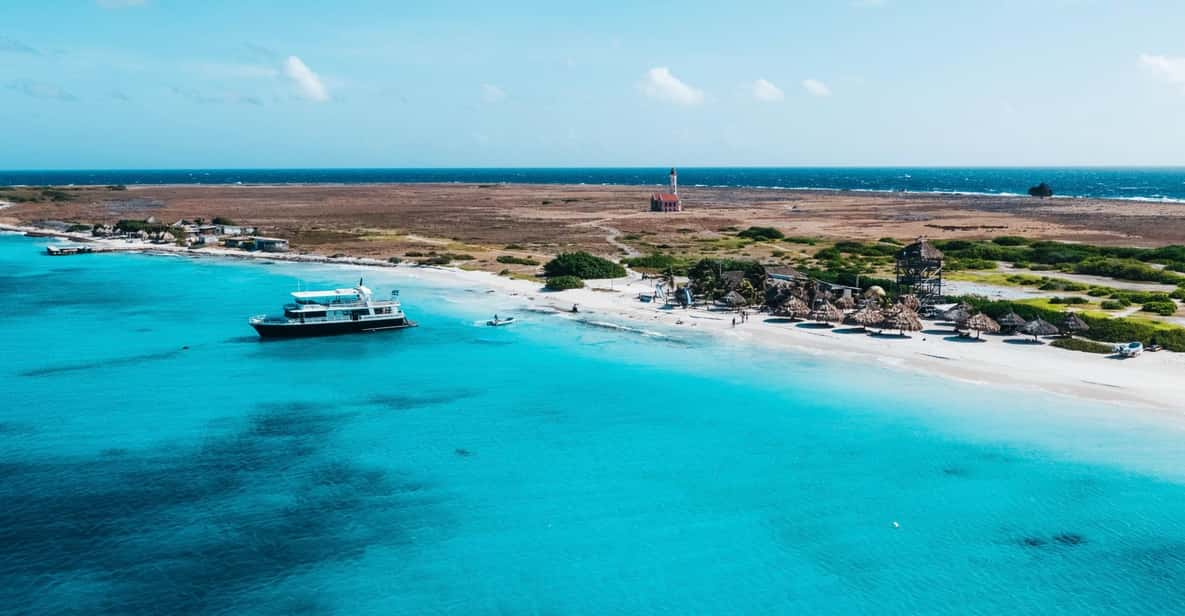
A lighthouse, a wrecked hull on the windward side, a few collapsed stone buildings and about half a square mile of flat coral sand. There is no shop, no drinking water, no toilet and no natural shade except the lighthouse itself. The palapas along the beach are not public — individual catamaran operators build and maintain their own for their own guests, so shade is something your boat either provides or does not. Bring more water than you think, and shoes if you intend to walk to the lighthouse across the thorn and rock.

Does hurricane season stop the boats?

Almost never. Curaçao sits around twelve degrees north, below the usual Atlantic hurricane track, and the historical record is short — Climates to Travel names Irene, Joan, tropical storm Bret, Ivan and Felix among the systems that have reached the island. The official danger window is June to November, sharpest from August to October, but those are also the calmest months for the Klein Curaçao crossing. The thing that genuinely disrupts a sailing here is a hard trade wind between January and April, not a storm.

When is the best month for a boat trip from Curaçao?

June through September, and September most of all. The sea peaks at 29 °C, the trades ease off, and the southeast crossing to Klein Curaçao is at its flattest — while the driest months of the year run February to July, so rain is rarely the deciding factor either way. February and March have the coolest sea at 26.5 °C and the strongest wind, which is fine for the sheltered sunset catamaran and hard work on the open-water run.
Nearby

Other ports on this coast

Or browse every boat tour and day cruise by port.